Sony intros multi-touch, quad-core VAIO L all-in-one!


Sony at an event tonight launched a trio of new systems, starting with its first touchscreen PC. The VAIO L supports Windows 7's own multi-touch elements for scrolling and zooming through content without needing special software. Like Gateway and HP, Sony has its own custom touch portal, here called Media Gallery, that lets users rely on touch to edit photos and videos.
This sexy all-in-one features Windows 7 support and also has its own multitouch capability for scrolling and zooming through content without any additional software. Sony’s custom touch portal, Media Gallery, lets you use touch to edit photos and videos.


The L begins at $1,300 with a 24-inch 1080p display, a 2.7GHz Pentium dual-core and 4GB of RAM, with a 320GB hard drive and a DVD writer for storage. It relies on a GeForce G210M integrated chipset for 3D and HD video decoding tasks. Higher-end models scale up to a 2.66GHz Core 2 Quad, 6GB of RAM, 1TB of disk space, a Blu-ray drive and a GeForce GT 240M to better decode HD video.

Pre-orders start today and will ship sometime in November.

The Zune HD!


When Microsoft first launched the Zune, the player was something of a kludge. The hardware design had been licensed wholesale from Toshiba, and the fact that it had WiFi and could "squirt" songs was little advantage in a world where few people bought the device. (Several years after its launch, I have yet to run across another person "in the wild" who owns a Zune.) As Microsoft's first product that was meant to derail the iPod juggernaut, it served instead only as a sacrificial victim that the juggernaut overran without pity.
But with the second attempt, Microsoft went from competent to very good. Even today, these second-generation devices are a pleasure to use and feature a few neat tricks like WiFi sync. Industrial design was hugely improved versus the first generation, though plastic was still much in evidence, and Microsoft rolled out both flash and hard drive models along with its Zune Originals engraving program. With Zune 1's “squirting” both useless and widely mocked, the company found new a way to capitalize on the second-gen Zune’s WiFi by providing access to streaming music directly from the Zune music store. Users who paid for the $14.99 monthly subscription could access millions of tracks, then stream or download them to the Zune player, all without hooking the device up to a computer.
For its third hardware redesign, Microsoft has given up on the value segment of the market altogether. Instead, the company is rolling out a single flash-based model in 16GB ($220) and 32GB ($290) varieties and loading it up with a few premium features: a 3.3 inch OLED 480x272 screen, support for HD radio, the NVIDIA Tegra HD video playback engine, a touch screen, real metal on the front and back, downloadable apps, and a Web browser. While updated firmware is available for older Zunes as well, the decision to focus on a single model and end-of-life the other Zunes is a chance for Microsoft to reset the Zune line, focus on a single well-made machine with some new capabilities, and see if there is any traction to be had in the market.
Can it succeed? That depends on whether users buy into the Microsoft way of doing things—a way that includes paying for a monthly music subscription. Those who take the bait will find themselves hooked (in both senses) by one of the best portable music discovery experiences yet created. The full subscription experience on the Zune is now unbelievably compelling, offering something that feels like more than the sum of its parts—but consumers have so far shown little interest in subscription music services.
For everyone else, the new Zune HD is “merely” an excellent media player with a gorgeous screen, HD radio, and 720p output over an HDMI connection.

The Razer Naga MMO mouse! Offspring of a mouse and a phone?


Razer has a history of making hardware designed for gamers, but the company's newest offering does something new; the product is a mixture of both software and hardware set up to make your raids a little more pleasant. While the Razer Naga mouse may simply look like a piece of gaming hardware with a number pad fused into it, the truth is actually much more intriguing.
No software is worth it if the hardware is not up to snuff, and luckily the Razer Naga is a sexy mouse. Yes, it lights up and the blue logo pulses in the dark—very impressive at LAN parties—but more importantly, the mouse features a 5,600dpi sensor, 1ms response rate, and a scroll wheel with 24 click positions. That's a lot of numbers that all mean that the mouse is ultra-precise and smooth in action.

The mouse itself feels good in your hand, although if you're a fan of larger, heavier mice you're out of luck here. I have moderately sized hands and was able to cup the entirety of the mouse very easily, and the hardware is light and easy to move. These are preferences more than issues or strengths with the product, but worth pointing out. The Naga is molded with places for your index, middle, and ring finger, and frankly this mouse is a joy to put your hands on. Even the cord hasn't escaped the notice of the designers; it's made from a braided material, not simple plastic. This would be an impressive mouse on its own merits, but the things that set it apart for MMO fans are noteworthy.

The pad on the side of the mouse features 12 buttons, with a selector switch on the belly of the mouse that maps them to either the top number buttons on the keyboard or the number pad on the side. It's interesting to see my laptop recognize the mouse as a keyboard, and then be able to use the number pads instantly. My wife—who is an accountant—found the idea of actually crunching numbers this way rather ghastly.
The real magic happens when you mix these buttons with Razer's software, called AddOns, which allows you to map these buttons to different actions inside your MMO game with ease. You can set up the buttons to operate like a phone keypad, or arrange them horizontally as they would be as the mouse sits on your desk. You can set it up so that your bindings on the Naga only impact certain characters. You can map the keys so that hitting them while holding the control button controls your pet. Here is a video from Razer showing how flexible the software is in World of WarCraft.

Blaze ‘Wiimote’ for PS3.!


Sony might want to pull the lead out with European video game accessory maker, Blaze, announcing its very own motion-sensing controller for the PS3. The Blaze PS3 Motion Freedom Controller sports more than a passing resemblance to a Wiimote and promises to bring Wii-like motion sensing capabilities to any PS3.
It boasts most of the controls found on a regular PS3 controller, including a directional D-pad, analogue stick and the full complement of buttons. Blaze says its controller employs, “the latest motion sensing technology,” but not having read my latest Motion Sensing Technology Weekly it’s unclear whether that means accelerometers, infrared bars, or some other method.
It’s also unclear how the Blaze controller will integrate with PS3 games, but the company claims it will “allow you to interact and become one with the hottest PS3 sporting and action title’” such as Sega Tennis and Tiger Woods Golf.
Blaze says its controller has been “ergonomically designed from the ground up,” but it’s hard not to think the design process involved a few sessions in front of a Wii given the appearance of the device. Still, they say imitation is the greatest form of flattery so, presumably, Nintendo is taking the design of the Blaze controller as a complement.
There’s no news on a release date or pricing for the Blaze PS3 Motion Freedom Controller, but there’s every chance it will be before the planned second quarter 2010 date Sony has penned in for the release of its own motion sensitive PS3 controller.

One ZX Series all-in-one PCs with multi-touch!


With Windows 7 just around the corner, Gateway has introduced a new line of all-in-one desktop PC’s that take advantage of the multi–touch capabilities of the highly anticipated operating system. The competitively priced One ZX Series combines stylish design with impressive features aimed at both the serious and more casual user.
Initially available in two variations, the ZX6800 and ZX4800, Gateway plans to release both with its TouchPortal interface, which sits atop Windows 7. Allowing the user to manage a suite of Gateway multi-touch applications, and give quick access to music, photos, social networking and the like, the TouchPortal interface can be “peeled back” at the swipe of a finger once the user is finished. Gateway believes the space-saving design of the One ZX Series is further enhanced by many applications doing away with the keyboard altogether.
Although the higher end ZX6800-01 is being aimed at more demanding users including “serious gamers” and the ZX4800-02 is touted as offering suitability for students and casual users, both systems will feature wireless keyboard and mouse, integrated HD web cam and microphone, six USB ports, Super Multi optical drive and multi card reader.
The ZX6800-01 packs a 23 inch HD Ultrabright widescreen display with 1920x1080 resolution, and is powered by an Intel Core 2 Q8200S 2.33GHz CPU and Intel GM45 Express chip set. Visuals come care of a 1GB ATI Radeon HD 4670 GPU. Other specs include 8GB of DDR3 memory, 1TB HDD and 64GB solid state drive, along with 802.11 b/g Wi-Fi, Gigabit Ethernet, a Hybrid TV tuner and eSATA port.
Meanwhile its lower end sibling, the ZX4800-02, features an Intel Pentium Dual Core processor and Intel GMA X4500 HD integrated graphics. Along with 4GB DDR2 RAM and a 750GB SATA HDD, the unit also incorporates 802.11 b/g Wi-Fi and a slightly smaller 20 inch HD display with 1600x900 resolution.
Both models will ship with Windows 7, while a third high performance unit, the FX6810-01, is expected to be released later in the year.
The Gateway One ZX6810-01 and ZX4800-02 will be released around the start of November and are priced from US$1399.99 and US$749.99, respectively. More information can be found at the Gateway website.

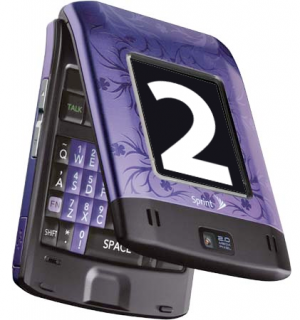
LG Lotus 2 rocks with outer touchscreen!


I never expected to see a basic phone like the LG Lotus get a sequel, but that’s apparently what’s happening, and the Lotus 2 seems to be upon us. The phone should be launching sometime in January, and will have the same QWERTY keyboard as featured on the original. As for differences, the Lotus 2 will replace the outer info screen with a touchscreen display, although, how useful a display that small will be with the added touch controls is questionable. In addition, the Lotus 2 will support 32GB microSD cards, up from 12GB on the original.

Be honest: the first time you saw the somewhat-short, somewhat-stout LG Lotus, did you think it would be successful enough to get a sequel? Looks like it was.
One of our sources just spilled the beans on what we’re tentatively calling the “Lotus 2″, for lack of a better name. It’s sounding a whole lot like the original so far, with just a few little tweaks thrown in for good measure.

Here’s what we’re hearing:
  • Very similar form factor to the original – same square shape, same QWERTY keyboard
  • This model will support 32GB microSD cards, whereas the original Lotus only supported up to 12GB.
  • Tentative launch date is currently set for some time in January.
  • The screen on the outer face will still be there – but this time around, it’ll be a touchscreen. We’re not sure how much functionality they’ll be able to squeeze into a touchscreen of that size (even if they bump the screen size up to fill most of the face), so we’re guessing it’s more for novelty than anything.

Toshiba's Cell Regza 55X1 is the pinnacle of LED TVs


Toshiba has upped the ante in TV technology by unveiling its flagship model, the Cell Regza 55X1. This new 55-inch LED unit has the TV junkie in mind with many features not seen before, including the ability to record up to eight channels at once, a 3TB hard drive (record and store up to 26 hours of HD programs), a powerful processing chip identical to the one found in the PS3, a dynamic contrast ratio of 5,000,000:1, 240Hz scanning, a display divided into 512 distinct areas (each with individually-controlled lighting and luminance that deliver an industry high 1250cd/m2 – 2.5 times higher than typical TVs, and a seven-speaker sound bar. All for a lazy ¥1 million (US$11,500 approx).
And if that doesn’t whet your appetite – wait, there’s more. Toshiba says a self-congruency process improves image quality at the edge of the picture. At the heart of the Regza is the Cell platform, which achieves an arithmetic processing capability approximately 143 times that of current top shelf Regza TV.
The company says its Cell Broadband Engine is specially developed for demanding multimedia applications and, with Toshiba's advanced image-processing algorithms, the Cell platform achieves these impressive viewing enhancements. This includes improved color and brightness balance for greater picture color and definition, LED backlight control system, luminance to 1250cd/m2, and the dynamic contrast ratio 5,000,000:1.
The Cell microprocessor was developed as a three-way venture among Sony, Toshiba and IBM for reportedly $US400 million. It first appeared in the PS3 but has since been used in IBM servers.

Never miss a moment

Of the 3TB on-board storage, 2TB are set aside for time-shifting – it’s possible to record up to 26 hours (total) of programming simultaneously across eight digital terrestrial broadcasts. A “time shift” key on the remote makes it easy to watch previously recorded programs.
Toshiba believes its improved "roaming navigation" lets viewers easily sort through all the information they may have captured. Searches can be conducted on recorded, current and future programs simply by inserting an identifier — the title, person's name, genre or related keywords.

Good looks, too

The Cell Regza comprises a slim monitor and a stylish tuner that also integrates the hard disk drive. Both have a smoked aluminum finish, as does the remote.
Toshiba's ClearScan 240 helps deliver blur-free fast moving images, by combining the 120Hz scan rate of ClearScan 240 with its new backlight scanning technology, Toshiba now achieves 240Hz scanning that makes action scenes crisper than ever. The new double backlight scanning function divides the display into 16, against eight for current Regza models.
Cell Regza has real-time color temperature analysis that can identify daylight, evening sunlight, interior lighting and darkness to achieve optimum picture quality by automatic fine tuning of multiple control settings: 1024 steps in color temperature, a 128 scale dynamic gamma range, 100 brightness settings, 32 settings each for color saturation, color sharpness, and adjustment of super resolution, plus control of the LED backlighting.
“Roaming Navigator" uses a visual display for faster navigation. A thumbnail of the program chosen by the viewer is centered in the display while other programs are shown circling this, either nearer or further, depending on relevancy. Searches can be based on program title, a character or actor's name, genre or keyword. Relevancy-based searches deliver what you are looking for, and much more.
"Multi Thumbnail" displays recorded programs as a multi-display of 40 time-divided thumbnails, making it very easy to select and go to a particular scene.
Toshiba admits that split screen is nothing new, but no other manufacturer is offering an eight-window multi-display.

Network functionality

A browser supporting full HD, based on the Opera browser and co-developed with Opera Software, provides full support viewing YouTube contents at near HD level quality. In addition, Cell Regza supports broadband, DLNA and JPEG images.
The TV has a newly-developed audio system and multi-amplifier system that delivers sound via a seven-speaker sound bar that Toshiba says far surpasses that of current TV sound systems.
Power consumption is controlled by maintaining optimum image brightness, however, the TV automatically goes into stand-by mode if no command is received from the remote controller for approximately three hours.
The Cell Regza 55X1 will be available in the Japanese market from the beginning of December and shipped elsewhere in the new year.
For additional information, head to Toshiba.